I know you want to start investing but you’re stuck on the first step.
You’ve read articles that throw around terms like asset allocation and diversification. You’ve seen people debate crypto versus stocks. And you’re probably thinking this whole thing is more complicated than it needs to be.
It doesn’t have to be.
What investment should I start with dismoneyfied? That’s the question I answer in this guide. No fluff. No finance degree required.
I’ve helped thousands of people take their first investing steps. The ones who succeed don’t start with complex strategies or hot stock tips. They start with simple moves that actually work.
This guide gives you exactly what you need: a clear list of the best first investments and why they make sense for someone just starting out. I’m talking about proven approaches that prioritize keeping your money safe while it grows.
You won’t find gambling disguised as investing here. You won’t find strategies that only work if you have a trust fund or an MBA.
What you will find is a straightforward path forward. The kind that lets you sleep at night while your money works for you.
By the end of this, you’ll know exactly where to put your first dollar. And you’ll understand why it’s the right move for building real wealth over time.
The ‘Demystified’ Philosophy: Investing on Your Own Terms
Most financial advice falls into two camps.
Either you get the Wall Street types pushing complex products you don’t understand. Or you get the personal finance gurus telling you to just save more and skip your coffee (because apparently that $4 latte is why you’re not a millionaire yet).
Both miss the point.
Real investing isn’t about following someone else’s playbook. It’s about building something that makes sense for your life.
That’s where the dismoneyfied approach comes in. No confusing jargon. No high fees eating your returns. Just straightforward tools that put you in control.
Here’s how it breaks down.
The Expensive Advisor Route vs. The DIY Approach
Traditional advisors charge 1% or more of your assets every year. On a $100,000 portfolio, that’s $1,000 annually. Over 30 years? You’re looking at tens of thousands in fees.
Compare that to low-cost index funds charging 0.03% to 0.20%. Same $100,000 portfolio costs you $30 to $200 per year.
The difference isn’t small. It’s the gap between retiring comfortably and working five extra years.
Three Pillars That Actually Work
Start with a secure base. I’m talking about emergency savings and stable investments before you touch anything risky.
Then automate your growth. Set up regular contributions so you’re not relying on willpower or perfect timing.
Finally, keep costs low. Every dollar you pay in fees is a dollar that can’t compound for you.
When people ask what investment should i start with dismoneyfied, I point them here. These three pillars work whether you have $100 or $100,000 to invest.
No tricks. Just a foundation you can build on.
Investment #1: The Non-Negotiable Financial Foundation
I’m going to tell you something that might sound boring.
Your first investment isn’t a stock. It’s not crypto. It’s not even a retirement account.
It’s an emergency fund.
I know that’s not what you want to hear. You came here looking for the next big opportunity, not advice about saving cash in a bank account.
But here’s my take. Every investor I’ve seen get wrecked had one thing in common. When life hit them hard (and it always does), they had to sell their investments at the worst possible time.
That’s what happens when you skip this step.
An emergency fund is your shock absorber. It keeps you from panic-selling when your car dies or you lose your job. You need 3-6 months of living expenses sitting somewhere safe.
Not invested. Not locked up. Just there.
Now, some people will tell you that keeping cash around is a waste because inflation eats away at it. They’d rather put every dollar to work in the market.
I disagree. The cost of not having an emergency fund is way higher than any inflation loss. Ask anyone who had to sell stocks in March 2020 to cover rent.
So where should this money go?
A High-Yield Savings Account. That’s an HYSA. It’s basically a savings account that pays you actual interest (usually 4-5% right now compared to the 0.01% your regular bank gives you).
Your money stays liquid. You can pull it out anytime. And it’s FDIC insured up to $250,000, which means even if the bank fails, your cash is protected.
Here’s what to look for. No monthly fees. That’s non-negotiable. A competitive APY that actually keeps up with other HYSAs (rates change, so check current offerings). And FDIC insurance.
Set up automatic transfers from your checking account. Even $100 a month adds up. Before you know it, you’ve got a cushion.
Once you’ve got this foundation? Then we can talk about when to report investment income dismoneyfied and building real wealth.
But not before.
Investment #2: The Core Wealth Builder (Low-Cost Index Funds & ETFs)
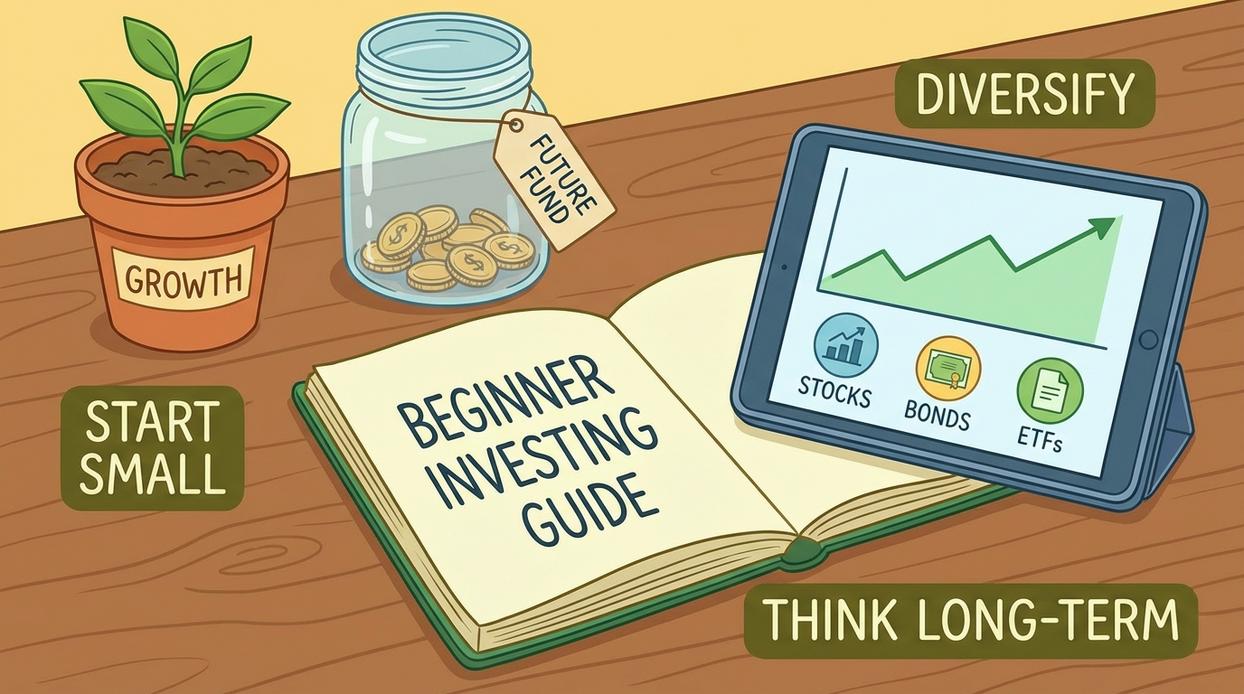
You know how buying a single lottery ticket feels like a long shot?
That’s basically what picking individual stocks is like when you’re starting out.
Now imagine instead of betting on one number, you could bet on all of them at once. That’s what index funds and ETFs do for your money.
The Simplest Way to Own the Market
Here’s the deal with index funds and ETFs. When you buy one share, you’re actually buying tiny pieces of hundreds or even thousands of companies all at once.
Take an S&P 500 index fund. One purchase gets you a slice of Apple, Microsoft, Johnson & Johnson, and 497 other companies. You don’t need to research each one or time your purchases perfectly.
You just own a piece of the whole market.
Think of it like a fruit basket instead of individual apples. Sure, one apple might be bruised. But the whole basket? Still pretty good.
This is what investment should i start with dismoneyfied comes down to for most beginners. Not because it’s boring or safe. Because it actually works.
Why Low-Cost Actually Matters
Most people skip right past expense ratios. Big mistake.
Let’s say you invest $10,000 in a fund with a 1% expense ratio versus one with a 0.04% ratio. After 30 years at 7% annual returns, that difference costs you about $30,000 (according to SEC calculations).
Same investment. Same returns. But one fund quietly eats your gains year after year.
I look for funds with expense ratios under 0.20%. Preferably under 0.10%.
Where to Start
You’ve got two solid options right out of the gate.
A Total Stock Market Index Fund like VTI or VTSAX gives you exposure to basically every publicly traded company in the US. Small companies, big companies, everything in between.
Or go with an S&P 500 Index Fund like VOO or FXAIX. This tracks the 500 largest US companies. Slightly less variety but still plenty of built-in protection.
Either one works. The important part is getting started with something that spreads your risk across the entire market instead of betting on individual winners.
Investment #3: The Next Step (Exploring Bonds and Dividend Stocks)
You’ve got your emergency fund. You’re putting money into index funds every month.
Now what?
This is where most people get stuck. They know they should diversify but they’re not sure how. And honestly, the advice out there makes it sound way more complicated than it needs to be.
Let me break it down.
Adding Bonds for Stability
Bonds are loans. That’s it.
You lend money to a government or corporation and they pay you interest. When the loan term ends, you get your money back (assuming they don’t default, but we’ll keep it simple for now).
Here’s why bonds matter. When stocks drop, bonds usually hold steady or even go up. They won’t make you rich but they keep your portfolio from swinging wildly every time the market has a bad week.
I recommend starting with BND, the Vanguard Total Bond Market ETF. It’s a basket of thousands of bonds so you don’t have to figure out which individual bonds to buy. You just buy shares of BND like you would any stock.
Simple. Done.
Dividend Stocks: Getting Paid While You Wait
Some people say dividend investing is outdated. They argue that total return is all that matters and dividends are just a tax headache.
Fair point.
But here’s what they miss. Dividends give you cash flow without selling shares. That psychological difference matters when you’re building wealth. It feels different to receive payments than to constantly sell pieces of your portfolio.
Dividend stocks are shares in companies that pay you part of their profits. Usually quarterly. Think companies like Coca-Cola or Johnson & Johnson that have been around forever and print money.
Don’t try picking individual dividend stocks yet. Start with NOBL, the ProShares S&P 500 Dividend Aristocrats ETF. It holds companies that have increased their dividends for at least 25 straight years.
That track record tells you something. These companies know how to make money in good times and bad.
When you’re figuring out what investment should i start with dismoneyfied, bonds and dividend stocks give you options beyond just growth. They add balance.
You don’t need much. Maybe 20% of your portfolio in bonds if you’re young. A small position in dividend stocks if the income appeals to you.
The dismoneyfied financial guide from diquantified covers this in more depth, but the takeaway is simple.
Start small. Add one thing at a time. See how it feels.
Your Path to Confident Investing Starts Now
You came here overwhelmed by financial jargon and risky options.
Now you have a clear three-step plan. A secure cash foundation that leads to diversified market growth.
This approach works because it prioritizes safety and low costs over hype. It’s built on proven principles that have helped people build wealth for decades.
No complicated strategies. No chasing the latest trend. Just a reliable path forward.
The three steps I’ve shown you remove the guesswork. You know exactly what investment should i start with dismoneyfied and why each piece matters.
Here’s your next move: Open a High-Yield Savings Account today. Set up your first automated contribution. That’s it.
Your foundation starts with that one action.
The overwhelm you felt before? It’s gone. You have a plan that makes sense and a first step you can take right now.
Start building today. Homepage.