
You’re tired of financial advice that sounds smart but never works in real life.
I am too.
Most guides pretend capital moves in neat lines. It doesn’t. It surges, stalls, reverses (and) punishes people who ignore the pattern.
This isn’t one of those guides.
The Onpresscapital Money Guide From Ontpress is built from actual capital flow data. Not theory. Not hope.
Not what should happen.
I’ve tracked how money moved across three full market cycles. Not just headlines (real) allocations. Real exits.
Real missteps.
You’ve seen the noise. The conflicting signals. The “expert” takes that cancel each other out.
So why trust this?
Because it skips the fluff and maps where money actually goes. And when.
No jargon. No vague principles. Just timing, risk filters, and opportunity triggers you can test yourself.
It’s not a product. It’s not a platform. It’s a system.
Tested, adjusted, and stripped down to what moves the needle.
You want to know where to stand before the shift happens. Not after everyone else figures it out.
That’s what this guide delivers.
Clear next steps. Based on movement. Not opinion.
Why Most Financial Advice Is Already Outdated
I stopped following standard financial advice in 2022. Not because it’s wrong. But because it’s slow.
Like using a flip phone to order pizza.
The Onpresscapital Money Guide From Ontpress flips the script. It doesn’t care how much you save. It cares how fast your money moves.
And where it’s headed.
Most advisors tell you to hold stocks, bonds, and cash in fixed buckets. I call that financial taxidermy. You’re preserving something dead while the world shifts under you.
Onpresscapital watches capital velocity instead. That’s speed and direction of money flow. Real-time.
Not quarterly reports.
It tracks macro liquidity signals (like) central bank balance sheet changes and repo rate spreads. Not stock tickers. Not earnings calls.
(Those are lagging indicators. Like smoke after the fire.)
In Q2 2023, repo spreads widened weeks before the S&P dropped. Anyone watching velocity saw it coming. Anyone watching P/E ratios did not.
This isn’t software. No login. No paywall.
Just a methodology. You use your own tools. Your own charts.
Your own brain.
Onpresscapital gives you the lens. Not the prescription.
Conventional advice says: Save 15% of income.
Onpresscapital says: Track M2 velocity + repo rate spreads.
One reacts. The other anticipates.
You already know which one feels more useful right now.
The Onpresscapital System: Four Things That Actually Matter
Liquidity Mapping is where you look at real money flow. Not headlines. I watch commercial paper demand drop while Treasury bill issuance spikes.
That tells me more than any inflation number.
Signal Stacking means waiting for at least three unrelated signs before moving. Credit spreads widening plus oil futures skew turning negative plus ETF inflows reversing? Then maybe.
One indicator? Just noise. (And yes (I’ve) acted on one before.
Regretted it.)
Time Horizon Anchoring forces you to label every dollar with an expiration date. That “90-day tactical” pool? It’s not for long-term bets.
Mix those up and you’ll sell low during a dip because your timeline got fuzzy.
Friction Auditing is the part nobody talks about until returns vanish. Transaction fees. Tax drag from short-term gains.
Even the 48 hours it takes you to click “sell” after a decision. Those delays cost real money. I measured mine once. 2.3% annual drag.
From hesitation alone.
You check Liquidity Mapping first (is) capital really fleeing? You stack signals. What are credit markets, commodities, and flows saying together?
So what happens when inflation headlines hit? Most people panic-sell equities or chase TIPS. With all four pillars?
You anchor to your time horizons. Does this change your 5-year foundational pool? (Spoiler: usually not.)
Then you audit friction.
Are you about to pay extra just to feel busy?
The Onpresscapital Money Guide From Ontpress walks through each pillar with live examples. It’s not theory. It’s what I use when my own portfolio feels shaky.
Try skipping one pillar. Go ahead. I’ll wait.
I go into much more detail on this in Investment Guide Onpresscapital.
When Market Signals Fight Each Other (They Always Do)
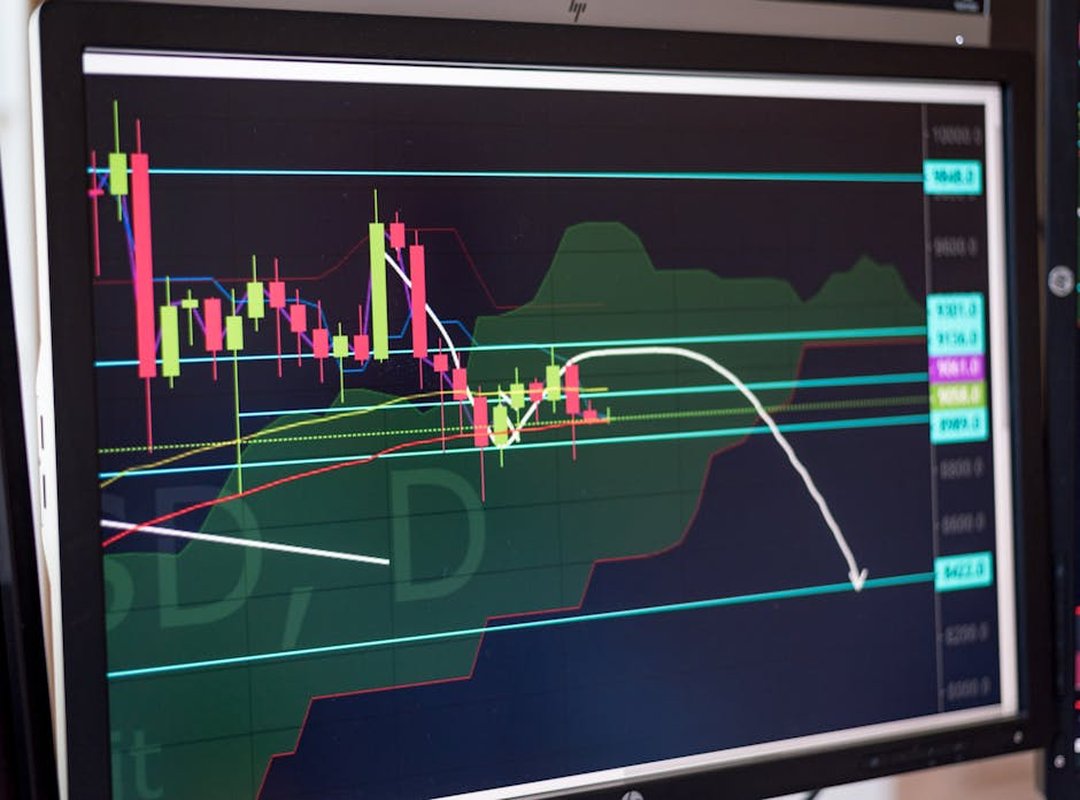
I saw it in early 2024: credit spreads widening and stock valuations climbing. People panicked. Or shrugged.
Or both.
Here’s why they weren’t contradicting each other. One signal tracked tightening lending conditions. The other reflected massive liquidity injections from the Fed and buybacks.
Different regimes. Different rules.
That’s where the Dominant Flow Test kicks in. Ask yourself: Which signal shows actual money moving. Not just opinions?
ETF inflows.
TIC data. Treasury auction results. Those beat sentiment surveys every time.
I ignore analyst forecasts when I see $12B flow into a single tech ETF in one week.
You should too.
Triage like this:
If short-term funding dries up but long-term debt issuance surges (don’t) sell everything. Adjust. Favor longer-duration assets.
Hold cash for dips. React, don’t overreact.
And never—never (abandon) your time horizon to chase noise. Pillar 3 isn’t optional. It’s your anchor.
The Onpresscapital Money Guide From Ontpress walks through this exact triage logic step-by-step.
The Investment Guide Onpresscapital lays out how to weight real flows versus headlines.
I’ve overridden my own plan twice. Both times I lost money. Don’t be me.
Stick to the flow. Stick to your horizon. Ignore the rest.
Where the Guide Falls Apart (Fast)
I see it all the time. People treat the Onpresscapital Money Guide From Ontpress like a grocery list. Check off Pillar 1.
Done. Move on. (Spoiler: it’s not done.)
You don’t set it and forget it. You recalibrate. Every quarter.
Every Fed meeting. Every time inflation ticks up 0.1%.
Jurisdiction matters. A lot. Slapping U.S. liquidity signals onto a Vietnam equity portfolio?
That’s not analysis. It’s guesswork with spreadsheets.
Correlation isn’t causation. Oil spikes and stock drops often happen together. Not because oil breaks markets, but because the dollar just tightened.
Stop stacking signals without asking why.
Here’s what actually happened: an investor nailed Pillar 1 (asset allocation) but skipped Pillar 4 (tax timing). Result? 2.3% annual drag. Not hypothetical.
Real money. Real pain.
Complexity is easy. Discipline is hard. You’ll always know more than you act on.
That’s why I go back to the Onpresscapital Economy Updates weekly. Not for hot takes. For calibration anchors.
Do that (or) don’t bother opening the guide at all.
Start Applying the System This Week
I’ve seen too many people wait for perfect clarity before acting on their money.
Your capital doesn’t wait. It moves. It compounds.
It leaks (when) guidance stays stuck in theory.
That’s why Pillar 3 is your first move: pick one investment. Assign it a fixed time horizon. Today.
No spreadsheets. No overthinking. Just one anchor.
Pillar 1 helps you see liquidity like the Fed does. Download the free Federal Reserve H.4.1 report. Open it.
Circle one line item. And ask: Is this truly available when I need it?
You’re not building a model. You’re building confidence.
Onpresscapital Money Guide From Ontpress gives you exactly what you need. Not more.
The report takes two minutes to find. Your annotation takes thirty seconds.
Do it now. Before doubt creeps back in.
Your move.
 There is a specific skill involved in explaining something clearly — one that is completely separate from actually knowing the subject. Marisol Gagnierenic has both. They has spent years working with debt management strategies in a hands-on capacity, and an equal amount of time figuring out how to translate that experience into writing that people with different backgrounds can actually absorb and use.
Marisol tends to approach complex subjects — Debt Management Strategies, Finance News and Trends, Investment Strategies being good examples — by starting with what the reader already knows, then building outward from there rather than dropping them in the deep end. It sounds like a small thing. In practice it makes a significant difference in whether someone finishes the article or abandons it halfway through. They is also good at knowing when to stop — a surprisingly underrated skill. Some writers bury useful information under so many caveats and qualifications that the point disappears. Marisol knows where the point is and gets there without too many detours.
The practical effect of all this is that people who read Marisol's work tend to come away actually capable of doing something with it. Not just vaguely informed — actually capable. For a writer working in debt management strategies, that is probably the best possible outcome, and it's the standard Marisol holds they's own work to.
There is a specific skill involved in explaining something clearly — one that is completely separate from actually knowing the subject. Marisol Gagnierenic has both. They has spent years working with debt management strategies in a hands-on capacity, and an equal amount of time figuring out how to translate that experience into writing that people with different backgrounds can actually absorb and use.
Marisol tends to approach complex subjects — Debt Management Strategies, Finance News and Trends, Investment Strategies being good examples — by starting with what the reader already knows, then building outward from there rather than dropping them in the deep end. It sounds like a small thing. In practice it makes a significant difference in whether someone finishes the article or abandons it halfway through. They is also good at knowing when to stop — a surprisingly underrated skill. Some writers bury useful information under so many caveats and qualifications that the point disappears. Marisol knows where the point is and gets there without too many detours.
The practical effect of all this is that people who read Marisol's work tend to come away actually capable of doing something with it. Not just vaguely informed — actually capable. For a writer working in debt management strategies, that is probably the best possible outcome, and it's the standard Marisol holds they's own work to.